
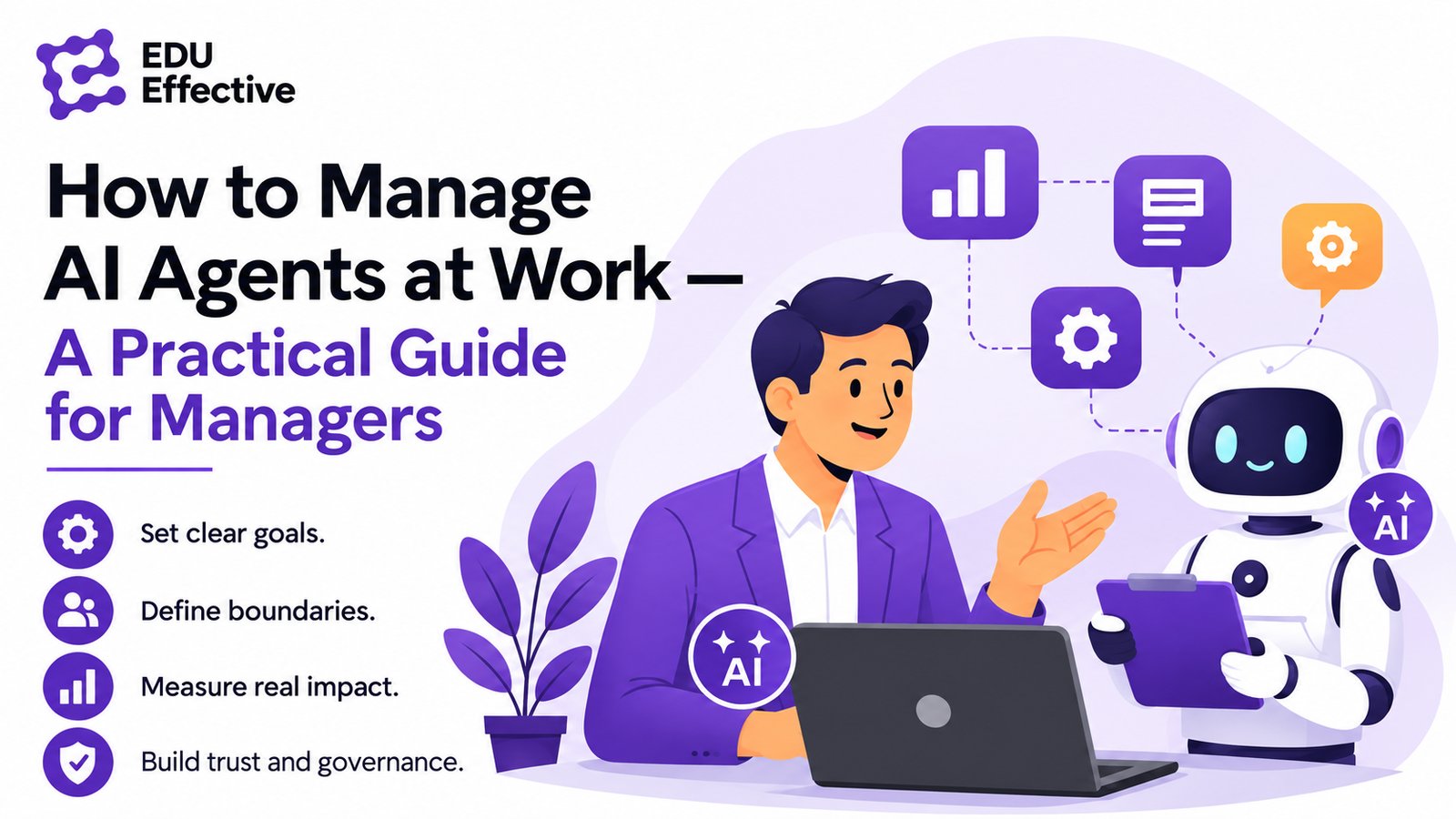

AI in Business Series, Part 1 of 4
Most managers have spent the last two years learning how to use AI. How to prompt it. How to check its outputs. How to fit it into a workflow that still runs on emails, meetings, and human judgment. That was the first wave.
The second wave is already here, and it looks different. AI agents don’t wait to be asked. They execute tasks autonomously — pulling data, drafting documents, running searches, making decisions within defined parameters — while the human sets the objective and reviews what comes back. The shift from AI as a tool to AI as a worker is not a future scenario. It’s what 23% of organizations are already scaling somewhere in their operations, according to McKinsey (2026).
The managers who figure out how to direct this shift will have a measurable advantage. Those who treat agentic AI the same way they treated the chatbot era — with curiosity but without a clear operating model — will find themselves managing the outputs of systems they don’t fully understand.
This guide is about the operating model.
What an AI Agent Actually Is — and What It Isn’t
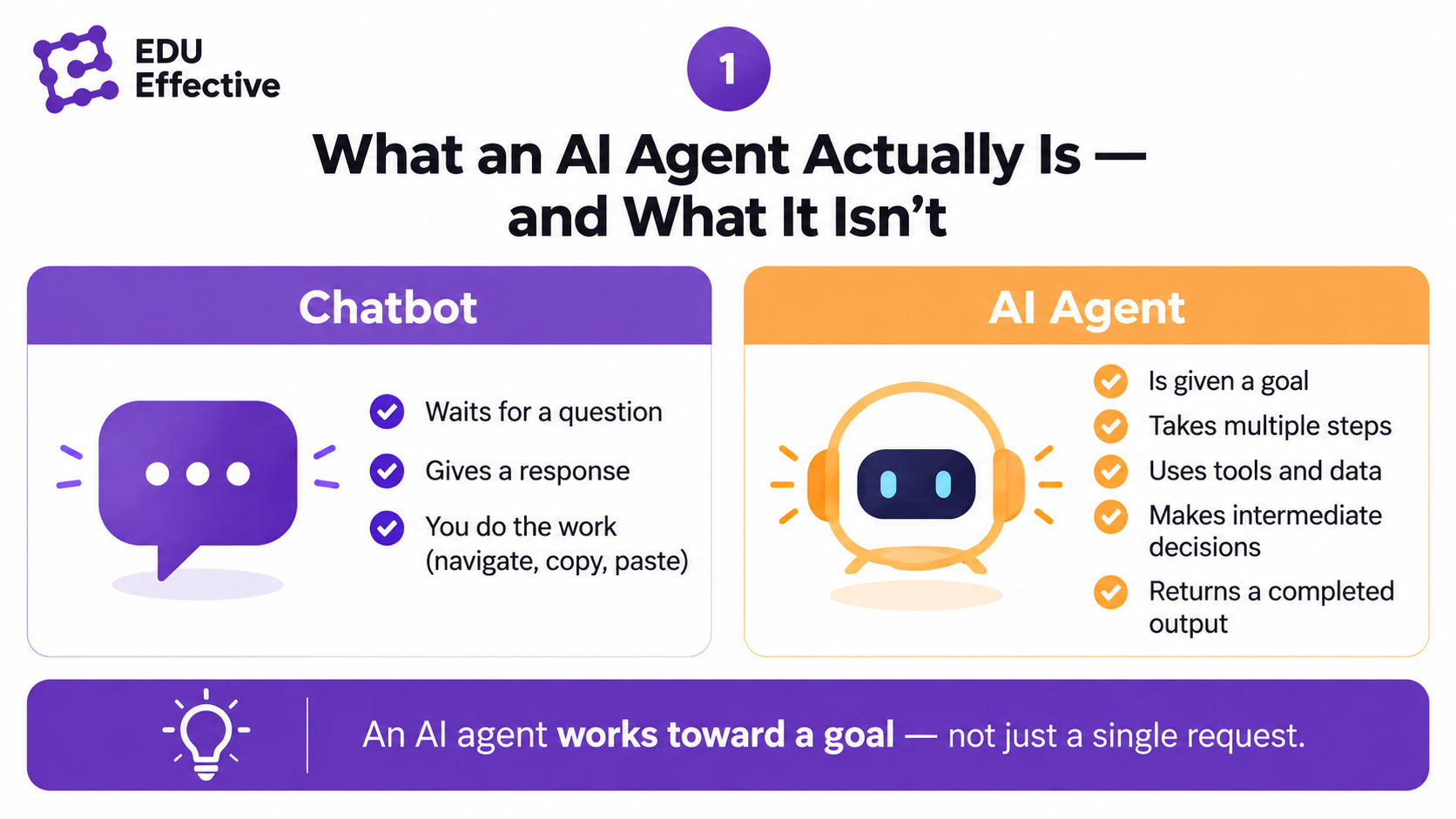
The word “agent” is being used loosely right now, which creates confusion. A chatbot waits for a question and gives a response. An AI agent is given a goal and works toward it — often taking multiple steps, using tools, making intermediate decisions, and returning a completed output rather than a drafted response.
The distinction matters practically. When you ask a chatbot to summarize a competitor’s pricing page, you do the work of navigating there, copying the content, pasting it in, reading the output, and deciding what to do next. When you give the same task to an agent, it finds the page, reads it, structures the comparison, and delivers the analysis — while you’re in a different meeting.
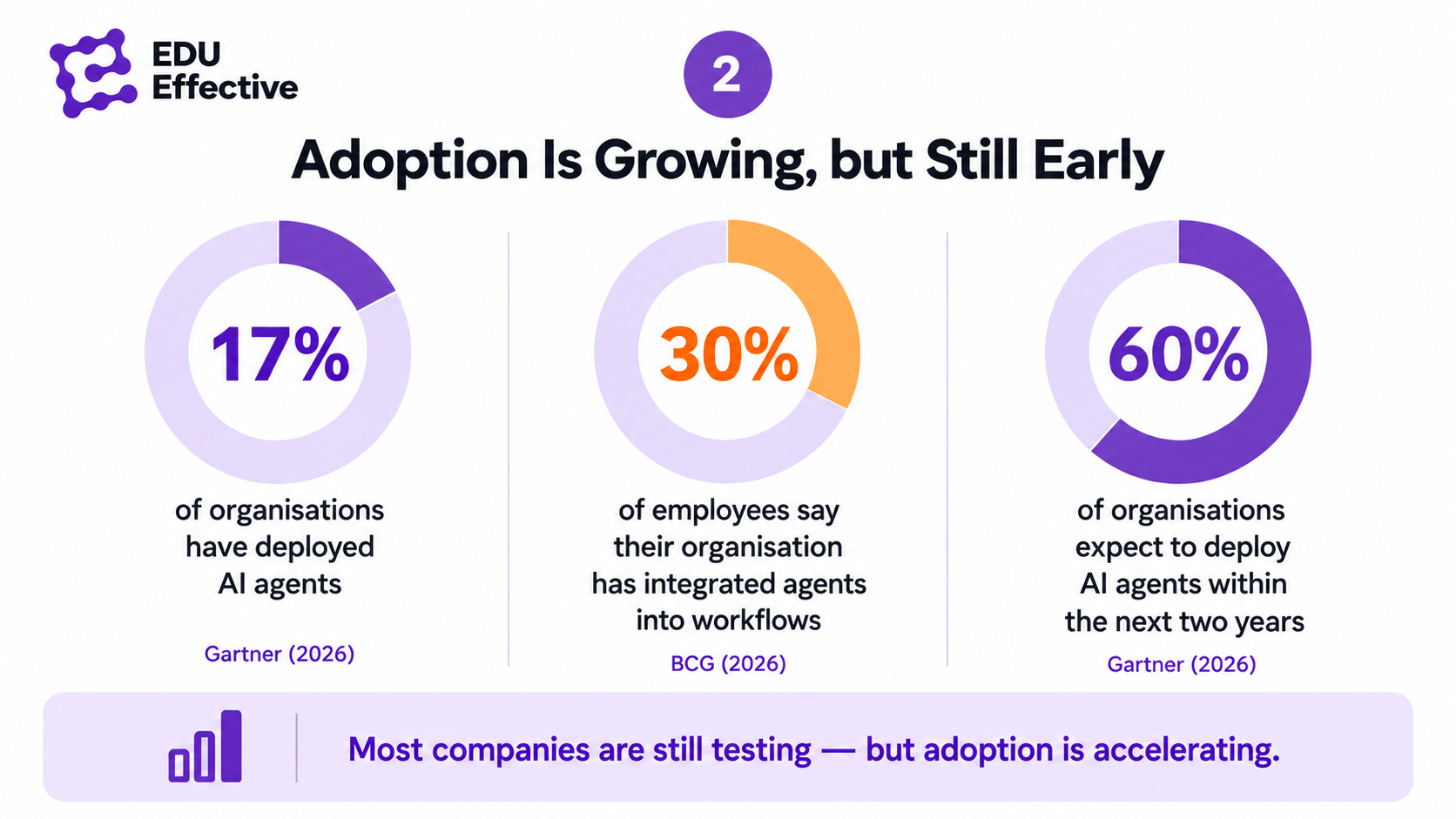
Gartner (2026) estimates that 40% of enterprise applications will integrate task-specific AI agents by the end of 2026. That’s not a niche trend. It means the software your team already uses — your CRM, your project management tool, your HR system — is becoming agentic. The question is no longer whether you’ll manage AI agents. It’s whether you’ll manage them well.
Why Most Organizations Are Getting It Wrong Right Now
Here’s the uncomfortable number: 56% of CEOs report that AI has yielded neither revenue growth nor cost savings to date, according to PwC’s Global CEO Survey (January 2026). Gartner (2026) goes further, forecasting that more than 40% of agentic AI projects will be abandoned by 2027 — because of runaway costs, unclear business value, and policy violations.
These failures aren’t mostly technical. They’re managerial. Three patterns come up repeatedly:
Deploying without defining. Organizations launch agents before specifying what success looks like, what decisions the agent is allowed to make, and where human review is required. The agent runs. Nobody agrees on whether it’s doing the right thing.
Treating agents like software, not workers. Traditional software does what you programmed it to do. Agents optimize toward an objective — and that optimization can produce outputs that are technically correct but commercially or ethically wrong. A customer service agent instructed to “maximize case resolution speed” will find ways to resolve cases quickly that have nothing to do with actual customer satisfaction.
Skipping governance. Deloitte (2026) found that only 1 in 5 companies has mature governance models for autonomous AI agents. That’s not a technology problem. It’s a management problem — the same kind organizations had to solve when they first gave employees authority over budgets, clients, or public communications.
The Manager’s Job Description Is Changing
When Microsoft’s 2026 Work Trend Index asked what makes the difference between AI delivering value and AI creating noise, the answer was organizational, not individual. Organizational factors account for more than twice the reported AI impact of individual factors — 67% versus 32%. The implication is direct: a manager who actively models and supports agentic AI use creates a 30-point lift in their team’s trust in the technology and a 22-point increase in critical thinking application.
The manager’s role in an agentic environment has four components that didn’t exist — or barely existed — two years ago.
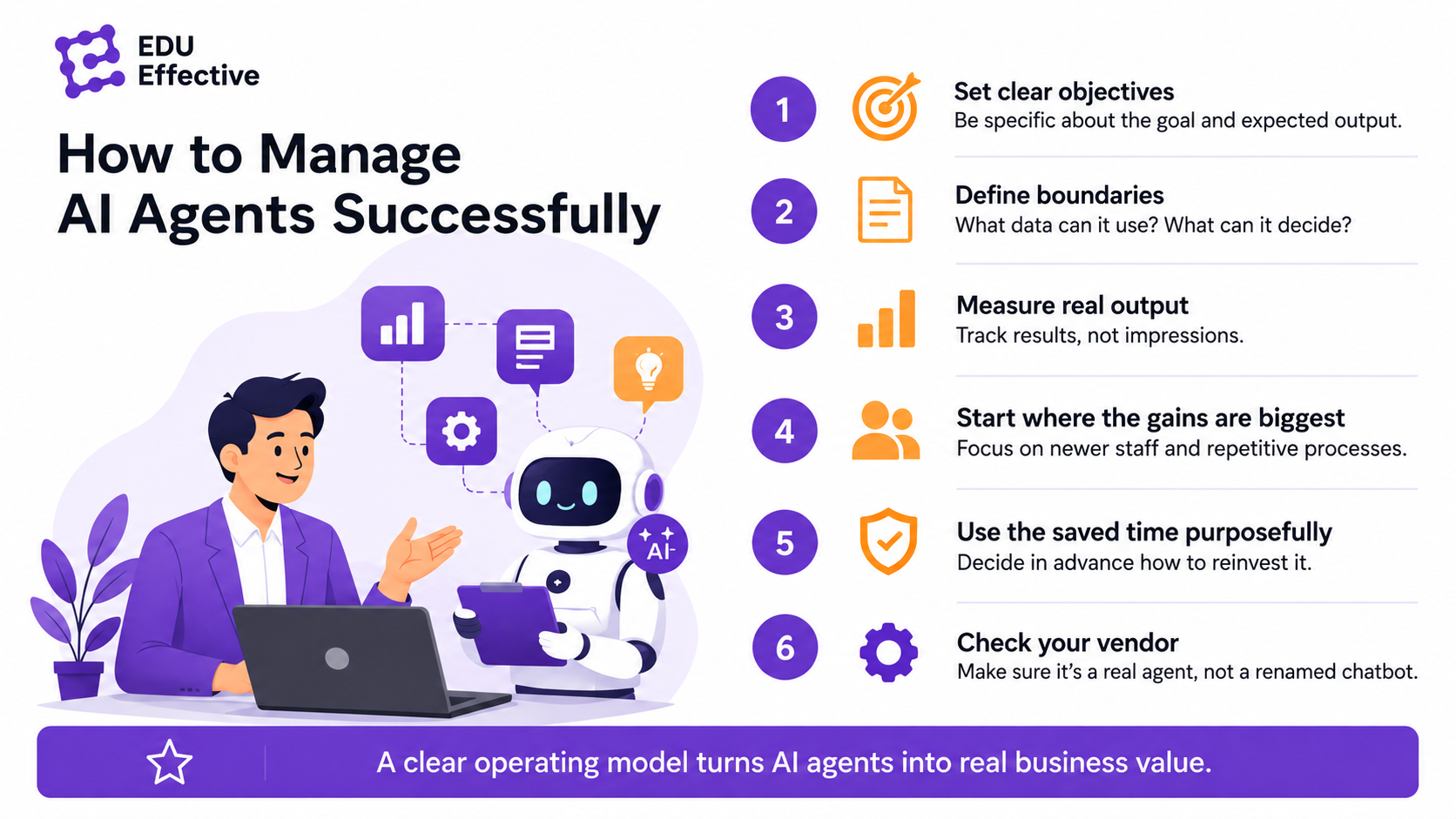
1. Objective setting — Agents execute toward goals. The precision of the goal determines the quality of the output. Vague objectives (“research our competitors”) produce vague results. Specific objectives (“identify the top three pricing differences between our enterprise tier and Salesforce’s equivalent, citing their public pricing page as of this week”) produce usable ones. This is a skill — and it’s one most managers haven’t had to develop before, because humans fill in gaps from context, organizational history, and common sense. Agents don’t.
2. Boundary definition — Every agent needs explicit rules about what it is and isn’t authorized to do. What data can it access? Can it send external communications? Can it modify records, or only read them? Can it escalate a decision, and to whom? These are governance questions dressed as technical configurations — but the configurations are set by people, and someone in management has to own the decisions behind them.
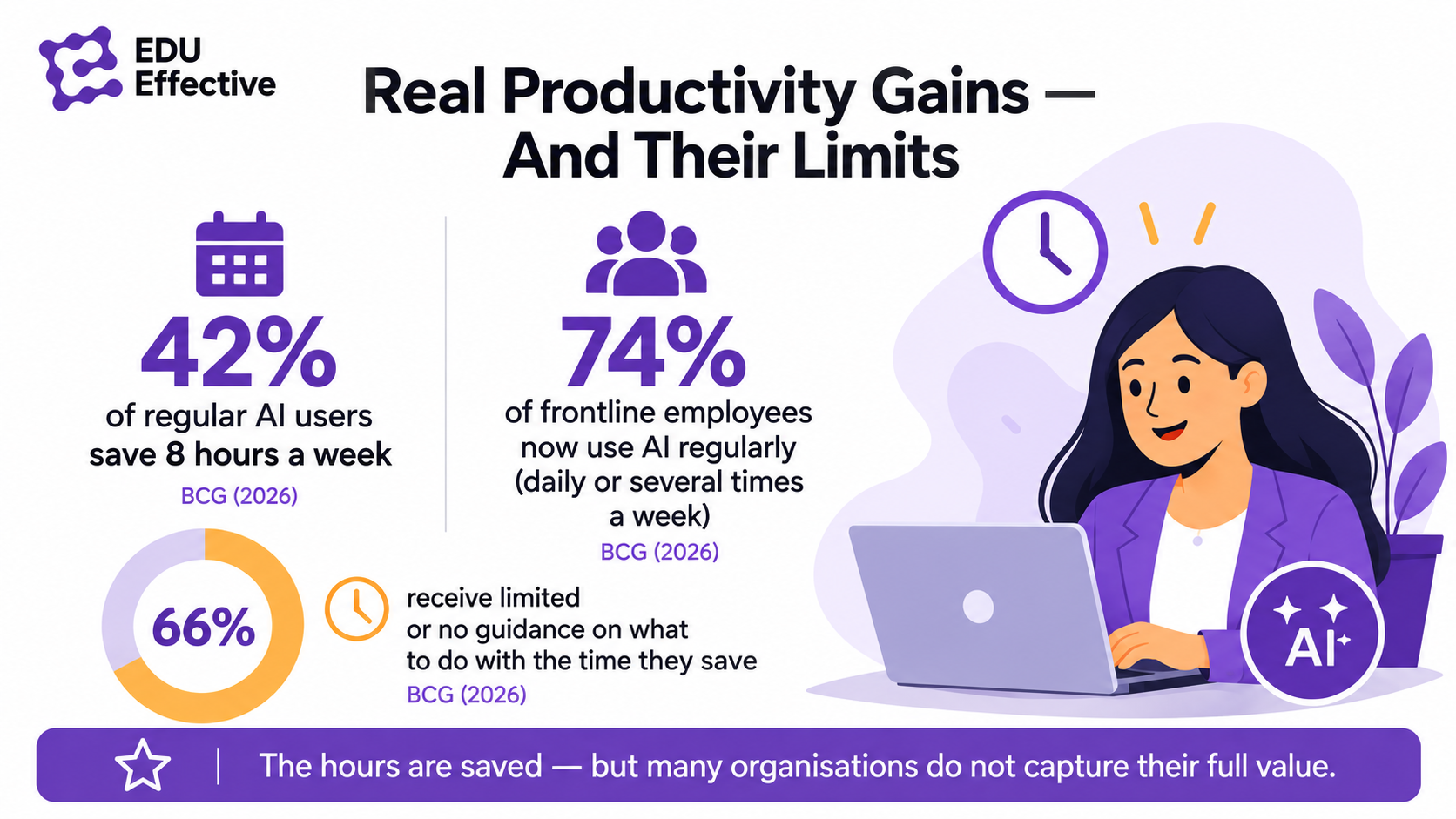
3. Output review — Microsoft’s data shows that 66% of AI users report more time on high-value work after adopting AI tools. The flip side is that the work that remains requires sharper judgment. Reviewing an agent’s output isn’t the same as proofreading a human’s draft. It means asking: Did the agent interpret the objective correctly? Does the output reflect the constraints we set? Is there anything technically correct here that we still shouldn’t do?
4. Iteration and improvement — Agents improve when humans give them better instructions, better boundaries, and better feedback on what good looks like. This is closer to managing a junior employee on a new account than maintaining software. The organizations that are getting ROI from agentic AI — and McKinsey (2026) puts that at roughly 6% of companies — have someone accountable for making the agent better over time, not just someone accountable for deploying it.
A Practical Framework: Five Questions Before You Deploy Any Agent
Before giving an agent a task — whether it’s a pilot with one person or a rollout across a department — these five questions will prevent most of the failure modes.
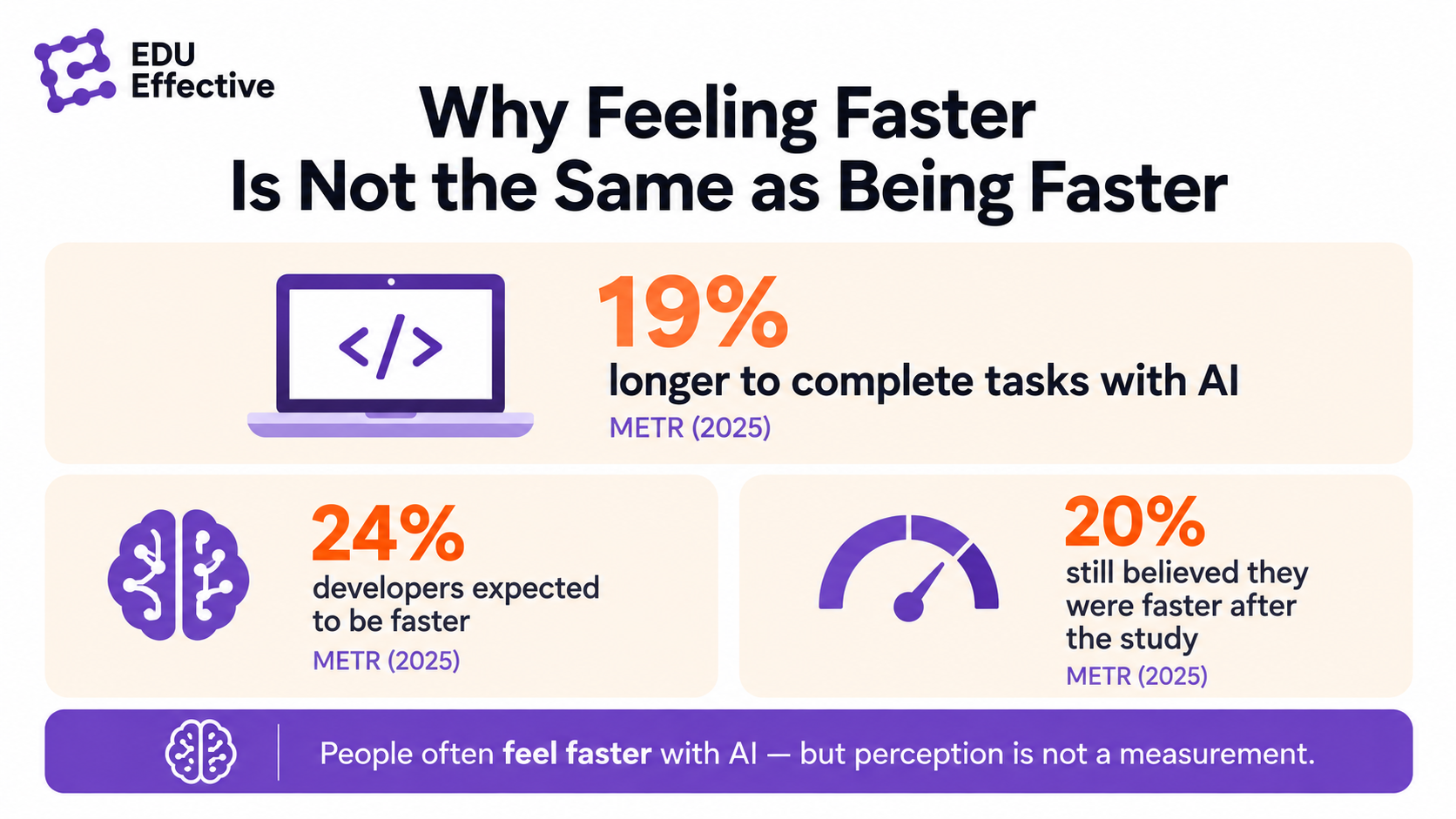
Question 1: What is the specific objective, and how will we measure success? Write it down. “Improve lead qualification” is not an objective. “Identify from inbound leads those that match our ICP criteria (company size 50-500, industry: SaaS, decision-maker title: VP or above) and flag them in the CRM within 24 hours of form submission” is an objective. If you can’t write it that precisely, the agent isn’t ready to run.
Question 2: What decisions can the agent make, and which require human approval? Draw a clear line. The agent can read and categorize. The agent cannot send a proposal. The agent can flag a contract clause as unusual. The agent cannot approve an exception. Undeclared decision rights are where governance failures happen.
Question 3: What does a wrong output look like? Before deployment, imagine the three most likely ways the agent could fail: misinterpreting scope, using outdated data, applying the right logic to the wrong situation. Build a review step specifically to catch these.
Question 4: Who is accountable for what the agent does? This matters more than it sounds. If an agent sends an incorrect quote to a client, who owns that error? The answer cannot be “the AI.” Someone in the organization has to be accountable for agent outputs the same way someone is accountable for an employee’s work. Define it before anything goes wrong.
Question 5: How will we improve this over the next 90 days? The first version of any agent is a draft. Build in a review cycle — weekly for the first month, monthly after that — to assess what the agent is getting right, what it’s getting wrong, and what the instructions need to change.
What Good Looks Like in Practice
Organizations that are making agentic AI work share a pattern that Microsoft (2026) describes as “Frontier” conditions: individual capability and organizational support are aligned. Only 19% of AI users currently work in these conditions — which means there’s a large gap between what’s possible and what most organizations have achieved.
The common features of the organizations closing that gap:
Senior managers actively use the same tools they’re deploying. When managers model AI use, their teams show a 17-point increase in reported AI value. This isn’t about performing enthusiasm. It’s about managers understanding the technology well enough to set realistic expectations and catch failures early.
They start narrow. The most successful deployments begin with a single, well-defined process — one that’s repetitive, data-rich, and low-risk if the agent makes a mistake. Invoice processing. Lead scoring. First-draft research summaries. They prove value in one place before expanding.
They treat governance as a first-class concern, not an afterthought. The organizations that have mature governance models for autonomous agents — still only 1 in 5 according to Deloitte (2026) — have built them before problems occurred, not in response to them.
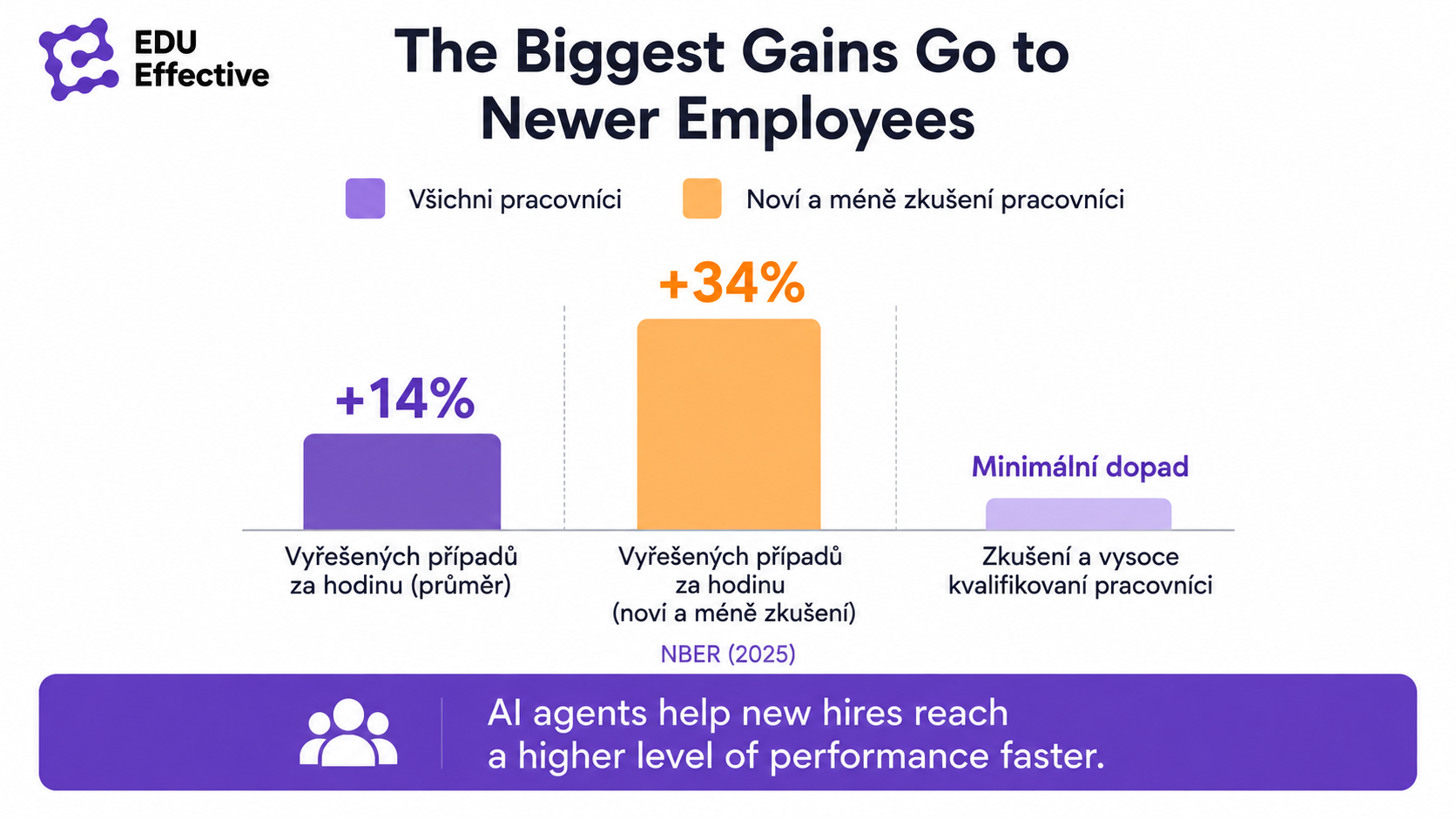
They measure what the agent enables, not just what it produces. The right question isn’t “how many tasks did the agent complete?” It’s “what did the people working alongside the agent do with the time they recovered?”
The Shift That’s Already Happening
Microsoft’s 2026 data shows a 15x year-over-year growth in active agents deployed within the Microsoft 365 ecosystem — 18x in large enterprises. That’s not gradual adoption. That’s compression. Organizations that spent six months deciding whether to pilot a tool are now managing dozens of agents across multiple functions, often without a coherent oversight model.
The managers who navigate this well won’t be the ones who understand the technology best. They’ll be the ones who apply to AI agents the same discipline they apply to human teams: clear objectives, defined authority, accountability for outcomes, and a commitment to getting better over time.
The technology is ready. The management practices — for most organizations — are not yet.
That’s the gap worth closing.
Continue Learning
This article is part of the AI in Business Series at EDU Effective, exploring how professionals can put artificial intelligence to practical use across sales, finance, marketing, and operations. The next articles in the series cover AI in Sales and AI in Finance.
If you’re ready to develop a systematic, practical approach to working with AI — including how to manage agents, build AI-driven workflows, and lead teams through the transition — the Effective MBA: Applied Artificial Intelligence and Effective MBA: Mastery in AI at EDU Effective are built for working professionals who need skills they can use immediately.
Join and start learning alongside peers from across the industry.
At EDU Effective, we build programs for professionals who want to work smarter — not just harder. Explore our programs →
EDU Effective Business School = professional development for your long-term success.
All best-selling Effective MBA programs are built for working adults: 15 minutes a day, 10 months or less, ASIC accredited, from €990.
- Effective MBA: Executive Management & Leadership
- Effective MBA: Applied Artificial Intelligence
- Effective MBA: Coaching, Leadership & Mentoring
- Effective MBA: Mastery in AI
- Effective MBA: Online Marketing
These are professional programs, not academic ones — built for working adults to apply what they learn directly in their own business, not to collect a scholarly credential.
Join more than 9,000 students in over 120 countries around the world to further your personal development and career success.
Read the feedback and experiences of our students and the stories of our graduates here.
Apply now — from €990 · Talk to a Study Advisor
Study with NO risk: 14-day money-back guarantee, no questions asked.
Sources
- McKinsey & Company — The state of AI: How organizations are rewiring to capture value, November 2025 https://www.mckinsey.com/capabilities/quantumblack/our-insights/the-state-of-ai
- Microsoft — 2026 Work Trend Index Annual Report: Agents, Human Agency, and the Opportunity for Every Organization https://www.microsoft.com/en-us/worklab/work-trend-index/agents-human-agency-and-the-opportunity-for-every-organization
- Gartner — Hype Cycle for Agentic AI, 2026; Top Strategic Technology Trends 2026 https://www.gartner.com/en/articles/top-technology-trends-2026
- PwC — Global CEO Survey, January 2026 https://www.pwc.com/gx/en/issues/c-suite-insights/ceo-survey.html
- Deloitte — State of Generative AI in the Enterprise Q1 2026 https://www.deloitte.com/us/en/what-we-do/capabilities/applied-artificial-intelligence/content/state-of-ai-in-the-enterprise.html